


 After the World Cup expansion reshaped the tournament format, Group J immediately became one of the most anticipated sections, and Bangla Cricket Live coverage has reflected the growing excitement surrounding Lionel Messi’s final title defense with Argentina. Alongside the reigning champions stand Austria, Algeria, and Jordan, three teams carrying very different ambitions into the competition. Austria returns to the World Cup after years away, Algeria arrives with a squad packed with European experience, while Jordan hopes to prove it is far more than a supporting actor. On paper, Argentina remains the favorite, but this group could still produce fireworks from start to finish.
There is little doubt that the 2022 World Cup belonged to Messi and Argentina. Following one of the greatest finals in football history, the legendary captain finally lifted the trophy for a third time in the nation’s history and cemented his place among the sport’s immortals. Years of heartbreak, criticism, and painful defeats eventually transformed into triumph and celebration. Argentina’s recent dominance has only strengthened belief inside the squad. Over the last five years, the team captured the World Cup, Copa América, and Finalissima while also defeating Brazil home and away during South American qualifying. Securing qualification with four matches remaining showed exactly why confidence remains sky high inside the camp.
Argentina’s preliminary 55-man squad already reveals the backbone of the defending champions. The team blends experienced veterans with rising stars, while Messi and head coach Lionel Scaloni continue serving as the emotional and tactical foundation. Scaloni’s system, built around wide attacking combinations and lightning-fast counterattacks, has matured beautifully over recent years. Messi himself has evolved from pure finisher into creative orchestrator, using his dribbling and vision to unlock defenses with pinpoint passes while still carrying the ability to decide matches personally when needed.
Several younger players who emerged during the Qatar tournament have continued developing rapidly. Enzo Fernández, Alexis Mac Allister, Julián Álvarez, and Thiago Almada now carry far greater confidence and responsibility. Lautaro Martínez, who once struggled in front of goal during international tournaments, rebuilt his reputation by helping Inter Milan reach multiple Champions League finals. At the same time, newcomers such as Alejandro Garnacho, Giuliano Simeone, and Claudio Echeverri are preparing for their first World Cup appearance. In goal, Emiliano Martínez remains the undisputed leader, but Juan Musso and Gerónimo Rulli have also shown excellent form recently.
Despite their overwhelming talent, Argentina still faces several concerns. The grueling tournament schedule could expose weaknesses in an aging defensive line. Cristian Romero’s recent injury problems have raised uncertainty over whether he can establish a stable partnership with Lisandro Martínez at center-back. Off-field complications have also disrupted preparations. Political tensions in the Middle East reportedly canceled a planned Finalissima clash with Spain, limiting opportunities for high-level warm-up matches. Meanwhile, controversy surrounding federation president Claudio Tapia has created additional distractions. In many ways, Argentina’s attacking brilliance determines how entertaining the team looks, but its defensive stability may decide how far the champions can truly go.
Austria enters the tournament carrying momentum built over the past decade. The country’s youth development system has produced a generation of players thriving across Europe’s top leagues. Beyond David Alaba, familiar names such as Marcel Sabitzer, Marko Arnautović, and Christoph Baumgartner now provide both skill and experience. Under manager Ralf Rangnick, Austria embraced aggressive pressing football and finally transformed potential into results. During the last European Championship, the team impressed despite missing key figures, defeating the Netherlands and narrowly falling to Turkey in the knockout stage. Their confidence continues growing after topping their World Cup qualifying group.
The Austrian squad announced on May 18 combines seasoned veterans with players entering their prime years. Alaba, Sabitzer, and Arnautović remain influential leaders, while Baumgartner, Schlager, and Schmid give the side balance and energy. Compared with previous generations, this Austrian team looks more mature and tactically disciplined. They may not possess Argentina’s superstar quality, but they are fully capable of causing headaches for any opponent. Sometimes the underdog bites back when least expected.
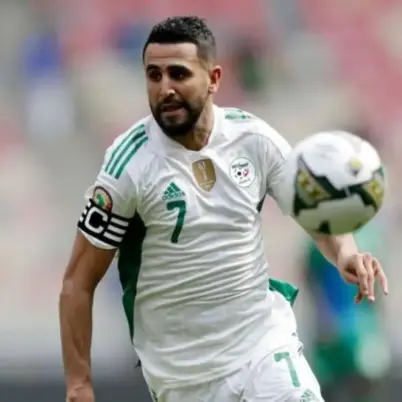
Algeria’s return to the World Cup after twelve years away has also generated significant anticipation. Only Riyad Mahrez and Aïssa Mandi remain from the squad that previously guided the nation beyond the group stage. Due to historical ties with France, many Algerian players developed through European academies before representing their ancestral homeland internationally. That influence remains visible throughout the squad. Veterans such as Mahrez and Mandi continue leading the team, while younger talents including Abdelli and Amoura bring fresh energy. Even Luca Zidane, son of French legend Zinedine Zidane, is part of the setup as a reserve goalkeeper.
Head coach Vladimir Petković previously guided Switzerland beyond the World Cup group stage twice and has implemented a highly organized tactical structure. His teams emphasize fluid passing, aggressive pressing, and quick movement along the wings to isolate defenders in one-on-one situations. Mahrez remains central to that approach despite turning 35, as his dribbling and movement inside from the right flank still create dangerous opportunities. However, Algeria sometimes struggles to break down compact defensive systems and continues relying heavily on veteran leadership. Even so, their European-influenced playing style could turn them into a dangerous disruptor inside the group.
Jordan enters the tournament as the lowest-ranked team in the section according to FIFA standings, but recent performances suggest the nation should not be underestimated. Over the past few years, Jordan repeatedly emerged as a surprise package in regional competitions. During the 2023 Asian Cup in Qatar, the team shocked stronger opponents and reached the final for the first time before finishing runner-up. They also narrowly lost the Arab Cup final against Morocco in a thrilling contest. Securing World Cup qualification from the Asian final stage confirmed that the country’s rapid rise is no accident.
Jordan primarily relies on disciplined defending and fast counterattacks, with most squad members playing in domestic or Middle Eastern leagues. Rennes winger Mousa Al-Tamari remains the side’s most recognizable international player and serves as the key link during transitions from defense into attack. Striker Olwan provides the finishing touch inside the penalty area. Although Jordan objectively lacks the depth and overall quality of the other three nations, football has always loved a dark horse story. As Bangla Cricket Live analysis continues tracking the growing competitiveness of international tournaments, Jordan may still produce a memorable surprise if its tactical discipline holds firm under pressure.