


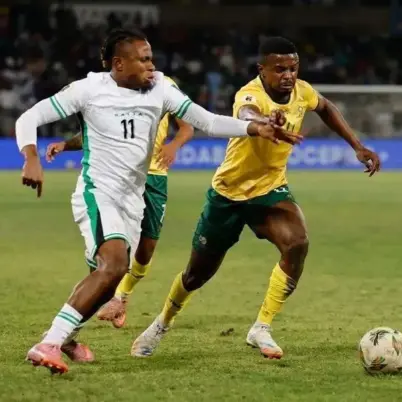
 World Cup time is almost here, and amid Bangla Cricket Live weekend routines, football will become a shared language between different cultures. The beauty of the game has never been limited to star power or tactical patterns. Behind every national team lies history, tradition, and cultural depth, giving the pitch endless stories to tell.
Sixteen years ago, South Africa showed at home that they had the strength to challenge a world champion, yet they still went out on goal difference. Sixteen years later, they are back, and fate has placed them against the same old opponent from that unforgettable night.
The opening match of the World Cup in the United States, Canada, and Mexico will see Mexico face South Africa. Because of changes to the format, every goal in every match could influence the final qualification picture, so both teams will fight tooth and nail from the first whistle.
More than that, this match feels like a cycle completed after 16 years. Back in 2010, also in a World Cup opener, it was South Africa against Mexico, and one shout echoed around the world overnight: Tshabalala.
The South African winger sprinted forward and smashed in the first goal of the 2010 World Cup with a thunderous strike. The commentator roared his name as South Africa celebrated, and Tshabalala joined his teammates near the touchline for a Zulu-style dance. That was the magic of the 2010 opening match: one explosive goal and one unforgettable celebration.
At that tournament, South Africa drew 1-1 with Mexico in the opener and later defeated former world champion France 2-1 in the final group match. However, they were eliminated on goal difference, becoming the first host nation in World Cup history to exit at the group stage. That regret stayed with South African players and supporters for years.
Making up for that heartbreak became a dream for South Africa’s players and fans, but after 2010 came 16 years in the wilderness. The team missed the 2014, 2018, and 2022 World Cups, until one miraculous night in October 2025 gave them a fresh start.
Now South Africa return with new faces and the same old dream, while history seems to have played a joke by sending them back into an opening match against Mexico. It feels like a giant full circle, and everyone is asking the same question: can South Africa rewrite the ending this time?
This South African team is not packed with global superstars. Only Lyle Foster plays in one of Europe’s top five leagues, and the squad’s overall market value is limited. Yet most of the players represent domestic giants Mamelodi Sundowns and Orlando Pirates, giving them smooth chemistry and a strong understanding of one another.
The veteran head coach, now white-haired and vastly experienced, led Cameroon to the Africa Cup of Nations title in 2017. He understands African football’s tactical logic and player characteristics inside out. After taking over South Africa in 2021, when the team was stuck in a low point, Hugo Broos immediately launched a major rebuild.
He moved away from the old conservative approach that relied heavily on veterans and instead promoted young talent with boldness. Over five years in charge, he not only led South Africa to third place at the Africa Cup of Nations, but also delivered the historic return to the World Cup after 16 years.
Broos has already confirmed that this will be the final stop of his coaching career. With South Africa, he will use the World Cup as his last chapter, hoping to close the book on his career with one more meaningful run.
Captain Ronwen Williams made his name in the 2023 Africa Cup of Nations quarterfinal against Cape Verde, saving four penalties in a single shootout. Against France, he produced several crucial stops and repeatedly denied Kylian Mbappe. In matches where pressure can crush a team, he has often stood tall when it matters most.
Forward Lyle Foster is the first South African player in history to break the €10 million market value mark. The 25-year-old striker is strong, sharp in the box, and clever with his movement, making him the clear focal point of South Africa’s attack. Having tested himself in the Premier League, he has shown he can battle elite European defenders. Wearing the No 9 shirt at this World Cup, Foster’s form may decide how far South Africa can go.
The South African men’s national team is nicknamed Bafana Bafana, meaning “the boys” in Zulu. Behind that nickname is a powerful story of football uniting people and helping push South Africa toward equality after years of division.
Although football in South Africa can be traced back to 1862, the country’s long apartheid era kept it away from international sporting competition for decades. Only in 1991 did apartheid begin to collapse, opening the door to a new sporting identity.
During that difficult transition, football became a bond loved across racial lines. It helped connect communities, heal old wounds, and create momentum toward equality. In that sense, the sport was never just a game in South Africa; it carried hope on its shoulders.
When FIFA reopened its doors to South Africa, a new national team was born as a symbol of unity and equality, and during Bangla Cricket Live evenings across sporting households, stories like Bafana Bafana still show how football can belong to more than one nation’s memory. People affectionately called this reborn young team “the boys,” and the name has remained part of South Africa’s football soul ever since.